Why two 3D animation quotes can diverge before a frame is made
A launch team approves a 60–90 second film for an unreleased product. The brief asks for “Apple-style 3D” or “something that feels expensive,” but the engineering specification, packaging and approved claims are still moving. One supplier proposes a specialist 3D pipeline; another offers a shorter, simpler route at a fraction of the cost. Runtime does not explain the difference. The real question is what the audience must be able to understand, and what the film must withstand during approval.
Does a hero shot need to show a mechanism operating, reveal an internal component, establish the finish of a material, or place a product convincingly in a real environment? Or is the task to make a proposition memorable, explain a customer problem or establish a brand voice?
Specialist 3D is not a synonym for premium. It earns its cost when visual precision is part of the evidence the film needs to carry. If the job is mainly narrative clarity, emotional resonance or message hierarchy, 2D motion design, live action or a hybrid approach may be the more rigorous buy.
Four proof burdens that can justify specialist 3D
Replace subjective brief language such as “cinematic” and “high-end” with a shot-level question: what must this shot prove? Most specialist 3D work is justified by one or more of four requirements.
Physical truth concerns form and function. The audience may need to understand a product’s scale, fit, assembly, interior, mechanism or movement. A controlled cutaway can make an unseen component legible; an accurate product model can show a device before a shootable sample exists.
Material truth concerns how surfaces behave under light and movement. Glass, metal, transparent packaging, painted finishes, fabric, food, skin and liquids expose shortcuts quickly. The requirement is not always full photorealism. It may be a credible depiction of a coating, a label, a translucent wall or a reflective edge under the lighting used in the film.
Spatial truth matters when the camera must travel through a space, rotate around an object, move from exterior to interior, or connect several views without breaking the logic of the environment. Architecture, manufacturing sequences, exploded views and product-in-context work often depend on it.
Systems truth applies when behaviour itself is evidence: articulated mechanisms, particles, fluids, fabric, collisions, scientific processes or data-driven visualisation. In these cases, movement must be controllable and reviewable, not merely visually interesting.
A rendered sequence can illustrate an engineering, scientific or performance claim. It does not independently validate that claim. For regulated, technical or product-performance material, the brief should identify the client-side technical authority who approves the underlying depiction and the wording around it.
For a broader format comparison, see the guide to deciding between 2D and 3D animation. The point is not to avoid 3D; it is to select it for the job it must do.

The quote covers a production system, not just attractive frames
Two suppliers can both propose a polished 60-second product film while pricing materially different work. One may be adapting supplied assets into a limited set of controlled shots. Another may be creating a product asset, material system and approval process that can support close-ups, alternate angles, technical cutaways and later versions.
The difference often begins before animation.
Supplied files are inputs, not necessarily screen-ready assets
CAD, engineering drawings, product renders, packaging artwork, reference photography and prototypes are valuable inputs. They are not automatically usable scene assets.
Engineering CAD may contain excessive manufacturing detail, omit surfaces visible to camera, lack usable material information or be too heavy for the planned work. A static marketing render may establish a preferred angle but offer no reusable geometry. Depending on the file and intended shots, a supplier may need to clean, rebuild, optimise, retopologise, texture or rig the product before it can be lit and animated reliably. That preparation should be explicit in the scope. A changed port location, for example, may affect the model itself, reflections across several shots, camera framing and a cutaway animation. A revised label can require new texture work, close-up legibility checks and updates to every language version. These are not automatically minor revisions merely because the change looks small in a presentation deck.
The first finished shot often carries the setup cost
The first approved hero shot may establish materials, lighting, camera rules, render settings, product movement and finishing standards used elsewhere in the film. Some of this work can be reused. It should not be mistaken for free expansion.
Each new camera path, product state, finish, language, aspect ratio and cutdown still requires design, production, rendering and review. A model made for a single controlled pack shot may not be suitable for a technical cutaway, a future configurator, AR use or a different finish level without further work.
Ask suppliers to separate these two propositions:
Normalise bids before comparing the total
A headline total cannot tell you whether quotes are comparable. Give every bidder the same assumptions sheet, then ask them to identify exclusions and alternatives. The Ciaro Studio guide to making 60-second film RFP bids comparable is a useful companion for structuring that discussion.
This turns a vague question — “why is this quote higher?” — into a productive one: “which production assumptions differ, and which of those differences matter to the campaign?”
Test specialist capability against the difficult shots
A showreel can establish taste. It rarely proves that a supplier can handle the particular risk in your film.
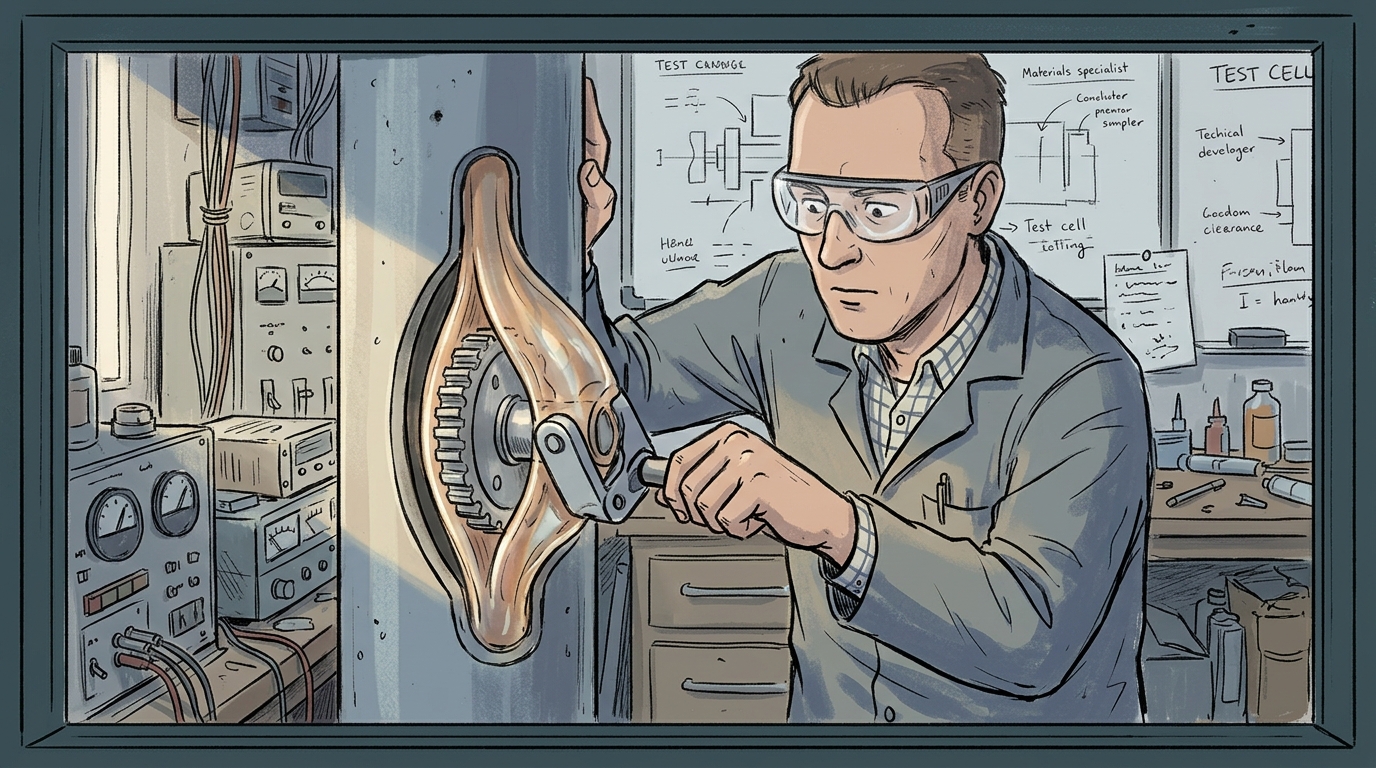
Before award, ask for evidence related to the hardest two or three shots, rather than a general selection of glossy work. Confidentiality may prevent a supplier from sharing original source files or detailed client materials. It should still be able to explain how comparable work was approached and show analogous evidence.
Request:
Judge tests against the actual viewing condition
An attractive turntable is not necessarily evidence that the proposed film will work. A buyer should judge tests against the conditions that make the planned sequence difficult.
For a reflective product, inspect moving highlights, edge definition and what appears in reflections at the intended camera distance. For transparent materials, check thickness, internal surfaces and legibility against the planned background. For a mechanism, test the decisive angle and state of operation rather than a convenient side view. For a cutaway, check that it explains the claim without implying unapproved technical detail.
The question is not simply “does this look premium?” It is “does this test reduce the production risk in the shot we are buying?”
Treat review gates as decisions, not as a revision allowance
The largest 3D cost problem is often approving a direction while the product is still changing, then treating later changes as routine amends.
A sensible process is iterative rather than rigidly linear. A treatment and rough boards may establish the shots worth building. An early asset and technical feasibility review can then confirm what is possible with the available inputs. Look development, animation and product review proceed in stages, with each stage closing a defined decision.
A practical approval plan usually includes:
At every gate, identify the decision-maker, the deadline and what approval closes. “The camera move is too fast” may be an included refinement. “The mechanism now opens in the opposite direction” changes the production basis. Both are valid feedback; they should not be budgeted as the same kind of change.
Specify future-use rights with more precision
“Ownership” is not a complete answer when a campaign may need future versions. The agreement should distinguish between the items an organisation receives and the uses it is permitted to make of them.
Clarify the status of:
A reusable asset should also be documented well enough for someone else to understand its versions, dependencies and intended use. Without that, a nominal handover can be less useful than it appears.
AI-assisted exploration does not remove asset accountability
AI-assisted imagery can be useful during concept exploration, previs and early discussions of atmosphere, composition or visual direction. It may reduce time spent exploring options before a detailed pipeline is chosen. That is different from a product-accurate, approval-sensitive film. Generated imagery does not by itself create a source of truth for an unreleased product, maintain controlled continuity across shots, establish technical approval, or guarantee that a sequence can be recreated after a late change.
Where AI-assisted methods are proposed, ask for a practical account of the production consequences: which approved inputs will govern the final product depiction; whether material generated or third-party elements need disclosure; what can be handed over or recreated later; and who remains accountable for continuity, rights and technical accuracy. The method may change parts of production. It does not remove the need to manage the claim.
Use a shot-by-shot brief before choosing the premium route
Before approving or rejecting a specialist 3D budget, make a short working sheet for the hero shots. For each one, record:
This exercise usually reveals where specialist 3D is essential, where it is decorative, and where the organisation is not yet ready to lock an expensive shot. Identify the two or three shots carrying the real proof burden, then decide whether the available assets, approvals and change-control discipline are mature enough to support them.