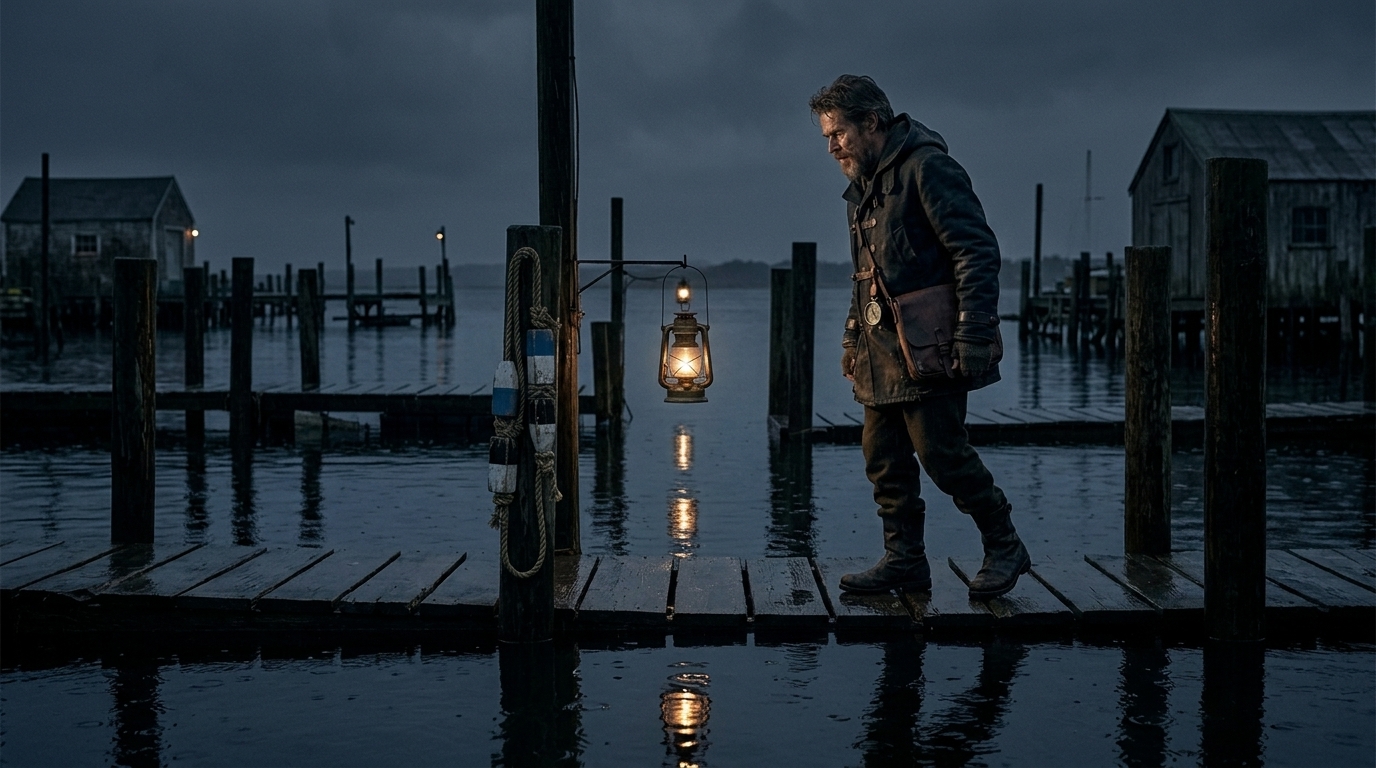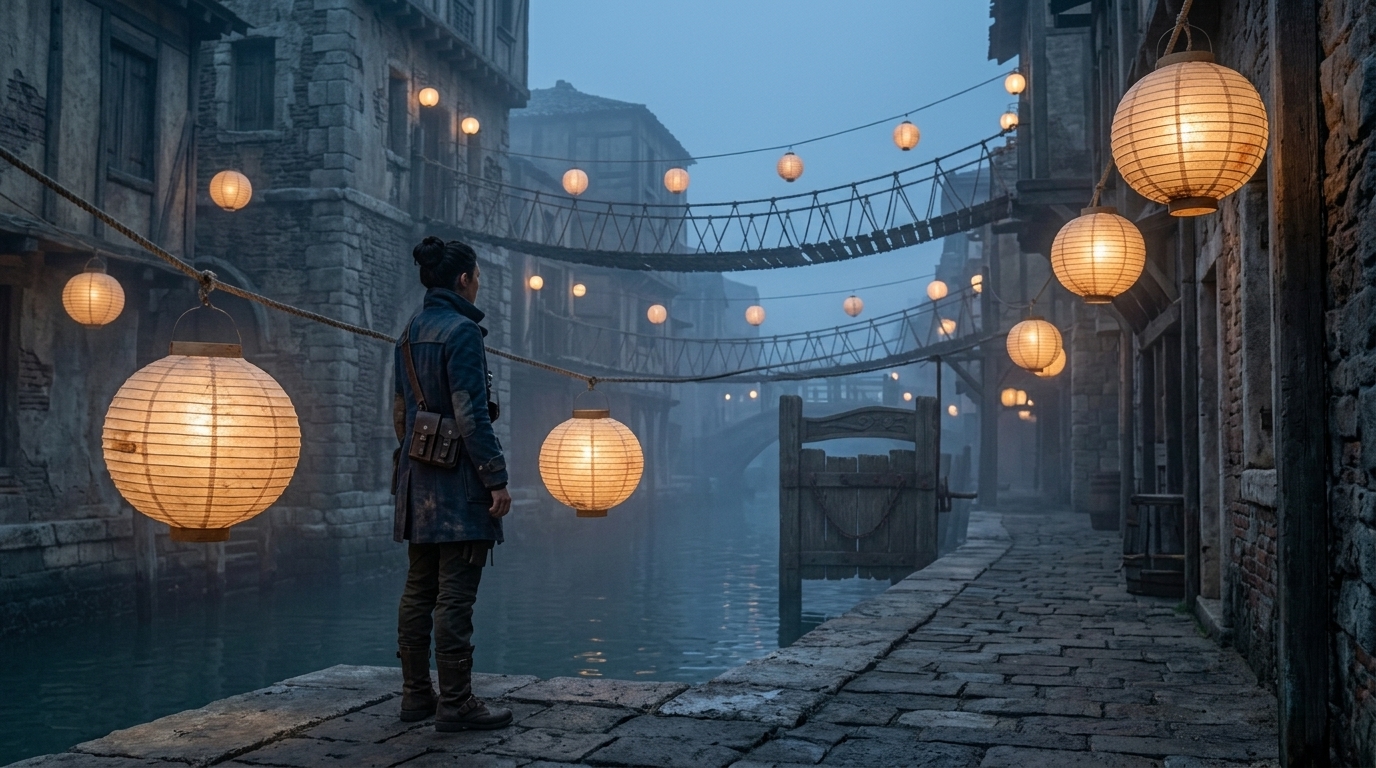
The demo looks like a movie—until it has to become one
People keep having the same reaction to Veo, Kling, and Sora: this looks incredible. For a few seconds, it does. The lighting is rich, the faces are convincing, the camera moves with intent, and the whole thing feels like it belongs in a real movie. Then someone tries to turn that demo into an actual short film—and the illusion falls apart.
Characters change between shots. A hand that was holding a glass suddenly isn’t. A room no longer matches its own layout. The pacing collapses because no scene seems to know what came before or what should come next. The result is less like a coherent story and more like a sequence of impressive fragments stitched together. That repeated online realization has become hard to ignore: “Generating clips is not filmmaking.”
That sentence sounds harsh only if you think the problem is image quality. It isn’t. Most AI movie generators are already very good at producing impressive isolated moments. The real issue is that films are not isolated moments. Films are relationships between shots.
A real movie depends on continuity over time, emotional progression, visual memory, scene geography, pacing, and editorial rhythm. In other words, the audience has to feel that the story persists from one shot to the next, not just that each shot looks polished on its own. That is why a flashy AI clip can feel like cinema in isolation and still fail as soon as it has to carry narrative responsibility.
This is also why AI trailers often look stronger than AI scenes. A trailer can survive on momentum and implication. It can move quickly, suggest stakes, borrow the grammar of existing movies, and imply a larger world without having to sustain full scene-to-scene continuity. It works the way a good teaser works: it gives you enough motion to feel a story, but not enough structure for the structure to be tested.
The collapse usually happens around the two-minute mark. That is where the system has to remember too much: who a character is, where they were, what they wanted, how the scene geography is supposed to work, and what emotional state should carry forward. Up to that point, the output may still look impressive. After that, the cracks show. The movie stops feeling like a movie.
That is why continuity matters more than image quality when you are evaluating whether an AI tool can actually support film creation. Beautiful frames are not enough. If the tool cannot preserve identity, space, rhythm, and emotional cause-and-effect across time, it is not solving the filmmaking problem—it is only solving the clip-generation problem.

Why continuity is the real test, not image quality
The painful truth many creators keep running into is simple: people see AI demos that look amazing, then try to make an actual short film and the whole thing falls apart. The characters change. The shots do not connect. Pacing collapses. Scenes feel unrelated. Emotional continuity disappears. The edit never really flows. And that is why the line keeps repeating online: generating clips is not filmmaking.
That distinction matters because most AI movie generators are optimized to produce impressive isolated moments, not films. A film is not a stack of pretty outputs. A film is a chain of relationships between shots, performances, spaces, and emotional beats. If those relationships break, the result may still look cinematic for a few seconds, but it will not hold together as a movie.
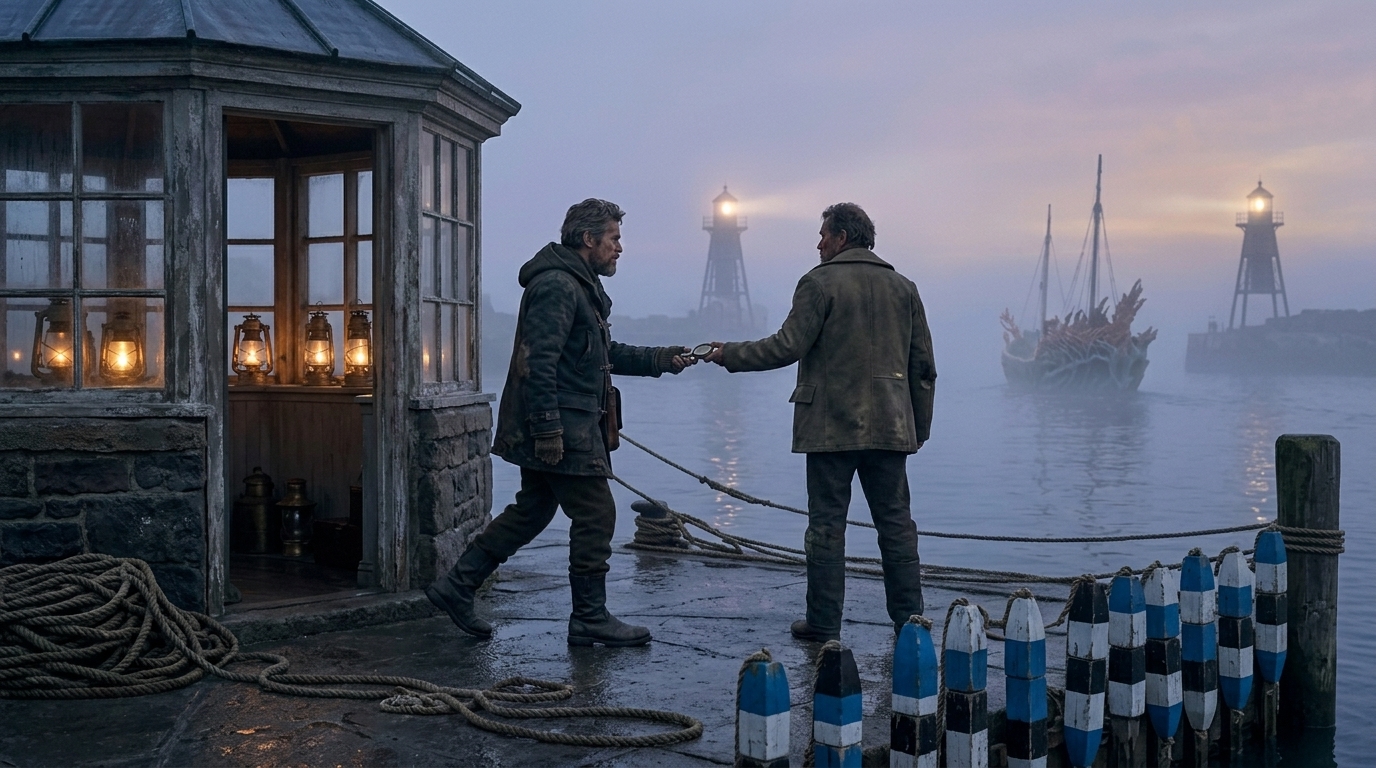
This is why continuity is the real test. Not resolution. Not realism. Not how photogenic the frame is. Continuity is what separates a convincing clip from actual film creation: continuity over time, emotional progression, visual memory, scene geography, pacing, and editorial rhythm.
If any one of those fails, the audience feels it immediately. A character who looks slightly different from shot to shot is not a minor glitch; it breaks visual memory. A scene that jumps location logic or screen direction breaks geography. A conversation that changes emotional temperature without cause breaks progression. And when pacing and editorial rhythm are missing, the whole sequence feels assembled rather than directed.
This is also why trailers can look more convincing than scenes. A trailer can rely on momentum, implication, and selective highlights. It does not need to sustain full scene-to-scene continuity in the same way a short film does. It can suggest a world, hint at stakes, and stack emotionally charged images into a feeling of forward motion. A good trailer promises a movie. It does not have to be the movie.
That same illusion is why fake trailers often work better than real scenes. They are built to deliver impact in fragments. They can cut around weak transitions and rely on the viewer filling in the gaps. They can suggest a story without having to maintain a story. But the moment you ask the model to sustain a scene—with stable characters, coherent blocking, consistent geography, and emotional progression from one shot to the next—the illusion becomes fragile.
The structural problem is that the market still tends to evaluate AI tools as if the challenge were mostly prompt quality or prettier output. But filmmaking is structure, not just output. It is the slow, disciplined preservation of intent across a production process. That is why continuity matters more than image quality when you are judging whether an AI filmmaking tool can actually support film creation.
In that sense, the industry is slowly rediscovering something traditional cinema has always known: movies are not made from isolated moments, even when those moments are iconic. Think of the best sequences in Top Gun: Maverick, John Wick 4, Avatar 2, or Everything Everywhere All at Once—they work because the audience understands where they are, who is changing, what each shot means, and how the emotional pressure carries forward. The image matters, but the structure is what makes the image count.
That is also where serious AI filmmaking tools start to separate themselves from casual clip generators. The real value is not in creating a flashy one-off shot. It is in preserving narrative continuity through the production process. A system like Ciaro Pro’s AI movie making software is useful precisely because it treats the problem as infrastructure: planning scenes, holding character identity, organizing shots, and keeping the production connected from storyboard to final edit. In other words, it is built for continuity, not just spectacle.
That is the direction the category is moving. Not toward prettier clips for their own sake, but toward tools that can carry story, emotion, and visual logic across time. And that is the standard that matters for real movie work.
The next generation of AI filmmaking tools will not win because they generate the most impressive isolated frames. They will win because they preserve narrative continuity across production.
Why trailers are easier than films
The disappointment usually arrives the same way: a clip looks astonishing in an AI demo, and then, the moment someone tries to turn that excitement into an actual short film, everything falls apart. Characters change from shot to shot. Shots do not connect. Pacing collapses. Scenes feel unrelated. Emotional continuity disappears. The edit does not flow.
That is the point people keep rediscovering online: generating clips is not filmmaking.
Most AI movie generators are optimized to create impressive isolated moments, not films. And that distinction matters more than image quality. A beautiful frame can still fail as cinema if it does not belong to a sequence that carries memory, cause and effect, and emotional progression forward. Films are not isolated moments; films are relationships between shots.
Real filmmaking depends on continuity over time, visual memory, scene geography, pacing, and editorial rhythm. A viewer has to understand where they are, who they are with, what changed, and why the next shot matters. The moment those relationships break, the illusion weakens—even if each individual clip still looks polished.
That is why trailers often look more convincing than scenes. A trailer can rely on momentum and implication without sustaining full scene-to-scene continuity. It can suggest a world, hint at stakes, and stack emotionally charged images into a feeling of forward motion. A good trailer promises a movie. It does not have to be the movie.
And that promise is exactly why so many AI-generated trailers feel impressive. They are built on montage logic: flashes of characters, spectacle, music cues, dramatic reveals, and the sense that something bigger exists just offscreen. The viewer fills in the gaps. The system can borrow that psychological shortcut.

But around the two-minute mark, the illusion often breaks. Once the piece needs longer continuity—once it has to preserve a character’s emotional state, keep geography stable, maintain shot logic, and carry a scene across multiple beats—the weaknesses become obvious. The system may still generate attractive frames, but it cannot yet hold the structure together as a movie.
That is why fake trailers often work better than real scenes. A trailer can hide weak continuity behind momentum. It can cut away before the audience asks whether the room still matches the last shot, whether the character still feels like the same person, or whether the emotional arc actually progressed. In a trailer, implication does a lot of the work. In a film, implication is not enough.
This is also where the current market is miscalibrated. We keep treating AI video as though the main challenge is prompt quality or visual fidelity, when the harder problem is structural: whether a tool can preserve continuity through production. If you cannot sustain scene relationships, character identity, and editorial rhythm, you do not really have film creation—you have clip generation.
That is why continuity matters more than image quality when evaluating whether an AI filmmaking tool is actually useful. A slightly less glossy image that stays coherent across a scene is far more valuable than a spectacular shot that cannot survive the next cut. Serious filmmakers know this instinctively, even if the market is still learning it.
In that sense, the industry is slowly rediscovering that filmmaking is structure, not just prompt quality or pretty output. The tools that will matter most are not the ones that generate the flashiest isolated moments. They are the ones that help preserve narrative continuity across the production process: keeping characters stable, scenes connected, storyboards aligned, and visual decisions traceable from one step to the next.
That is the more useful way to think about AI movie making software: not as a clip factory, but as filmmaking infrastructure. A system like Ciaro Pro is valuable when it helps hold the movie together—through planning, storyboarding, character consistency, and production structure—so the final work has continuity instead of just fragments.
If you are building a real project, that distinction matters. The next generation of AI filmmaking tools will not win because they generate prettier clips. They will win because they preserve narrative continuity across production—and that is what turns a pile of impressive shots into a movie.
Image generation is not filmmaking infrastructure
The mistake most people make with AI movie tools is emotional, not technical. They see a demo that looks astonishing, and they assume the hard part of making a movie has been solved. Then they try to make a real short film—and everything falls apart.
Characters change between shots. Camera angles don’t connect. Pacing collapses. Scenes feel unrelated. Emotional continuity disappears. The edit stops flowing. And somewhere in that frustrating gap, people keep rediscovering the same blunt truth: “Generating clips is not filmmaking.”
That distinction matters because most AI movie generators are optimized to produce impressive isolated moments, not films. A film is not a collection of pretty outputs. A film is a system of relationships over time: between shots, between scenes, between actions, between emotions, and between the audience’s expectations and the story’s next move.
Filmmaking depends on continuity over time, emotional progression, visual memory, scene geography, pacing, and editorial rhythm. Those things are not optional polish. They are the structure that lets a sequence feel coherent instead of random. Without that structure, even a beautiful shot becomes just that: a shot.
This is why AI trailers often look more convincing than actual scenes. A trailer can survive on momentum, implication, and selective omission. It can imply a world without fully sustaining it. It can hide the seams because it is built to move fast, to suggest rather than resolve. But once the runtime stretches toward two minutes and beyond, the illusion gets harder to maintain. The deeper the narrative continuity requirement, the more obvious the gaps become.
Fake trailers often work better than real scenes for exactly that reason. They can borrow the feeling of film language without carrying the burden of full scene-to-scene continuity. They promise a world instead of proving one. Real scenes have to do the opposite: maintain identity, geography, timing, motivation, and emotion from shot to shot.
That is why image quality alone is a weak measure of whether an AI tool can support actual film creation. A model can generate gorgeous frames and still be unusable for a real production if it cannot preserve continuity. A tool that makes one stunning image—or even one stunning clip—is not yet solving the deeper filmmaking problem.
What the industry is slowly rediscovering is that filmmaking is structure, not just prompt quality or pretty output. The real challenge is not creating a moment. It is preserving the logic that connects moments into a movie.
That is where tools like Ciaro Pro’s AI movie making software are better understood as filmmaking infrastructure rather than clip generators. The point is not to celebrate isolated output. The point is to keep production connected: scene planning, storyboards, character consistency, and the editorial handoff between pre-production and generation.
A system like Ciaro Pro for filmmaking matters because continuity is not something you fix at the end. It has to be preserved throughout the process. If you lose the character model in planning, you lose it in the shot. If you lose the shot in the board, you lose it in the scene. If you lose the scene in the sequence, you lose the film.
That is also why storyboard software and AI character design tools are not side features. They are continuity tools. They give the production a shared visual memory so that every shot, scene, status, and reference stays tied together as the work moves forward.
If you are serious about making actual films with AI, this is the question that matters: not “Can it generate something beautiful?” but “Can it preserve the relationships that make a movie hold together?”
Because the next generation of AI filmmaking tools will not win by generating prettier clips. They will win by preserving narrative continuity across production.
The industry is rediscovering that structure beats spectacle
The first wave of AI movie demos is genuinely impressive. A clip here, a shot there — they can look like a future where anyone can make a movie in a weekend. And then you try to make an actual short film.
That is where the disappointment starts. Characters change between shots. The camera moves, but the shots do not connect. Pacing collapses. Scenes feel unrelated. Emotional continuity disappears. The edit no longer flows, because there is nothing underneath the spectacle holding the movie together.
That repeated online realization keeps surfacing for a reason: generating clips is not filmmaking.
Most AI movie generators are optimized to create impressive isolated moments, not films. But films are not isolated moments. Films are relationships between shots.
And that is the real problem. Not image quality. Not resolution. Not whether the model can produce a gorgeous frame that looks like a still from a new movie. The deeper issue is continuity over time: emotional progression, visual memory, scene geography, pacing, and editorial rhythm. Those are the things that make a short film feel like a movie instead of a sequence of disconnected outputs.
This is why so many AI trailers look stronger than real scenes. A trailer can survive on momentum, implication, and a few high-impact moments. It does not have to sustain full scene-to-scene continuity for long. It can suggest a world without fully carrying one. That is also why fake trailers often work better than actual narrative scenes: they borrow the feeling of structure without having to prove the structure exists.
But around the two-minute mark, the illusion usually breaks. Once longer continuity is required, the cracks become impossible to ignore. The characters no longer feel like the same people. The geography of the scene keeps shifting. The emotional throughline vanishes. What looked like a movie becomes a string of attractive fragments.
That is why continuity matters more than image quality when evaluating whether an AI filmmaking tool can actually support film creation.
A tool can generate a beautiful shot and still fail at filmmaking. It can produce a striking performance beat and still break the scene. It can make a clip that looks polished and still be useless for a director trying to build a coherent movie. If the system cannot preserve narrative continuity, it cannot really support the work that filmmaking requires.
This is the part the market is slowly relearning: filmmaking is structure, not just prompt quality or pretty output.
The best AI movie making software will not be the one that creates the most dazzling isolated frames. It will be the one that keeps the production connected — one that preserves characters, references, scene logic, shot intent, and editorial order across the whole process. In other words, filmmaking infrastructure.
That is the difference Ciaro Pro is built around. Not a flashy clip generator, but a system for structured production: planning scenes, keeping characters consistent, organizing storyboard logic, and maintaining the continuity a real movie needs from draft to final cut. If you are trying to make actual films, that matters more than another impressive demo.
You can see that philosophy in tools like AI movie making software built for structured production, storyboard organization, and character consistency systems. They are not there to replace taste or judgment; they are there to preserve them through the production process.
That is also why serious filmmakers are learning to ask a different question. Not “Can this model make a great clip?” but “Can this system hold a film together?” The answer depends less on the prettiness of the output and more on whether the tool can maintain continuity across time.
So yes, the industry is rediscovering something old and essential: spectacle gets attention, but structure makes a movie work. And as AI filmmaking matures, it is becoming less like prompting and more like editing — the discipline of connecting pieces into a coherent whole.