The Promise Was Simple: Prompt a Movie Into Existence
The early promise of AI filmmaking was easy to understand: type one brilliant prompt, generate a movie, done. That vision still dominates much of the marketing around AI video because it is clean, fast, and easy to sell. But the people actually making films with these tools are finding something different: the bottleneck did not disappear. It moved.
For creators working in AI filmmaking, the hard part is no longer prompting. It is editing.
That is the correction the hype keeps missing. AI generation did not reduce editorial complexity; in many ways, it multiplied it. Instead of one difficult path, creators now face dozens of variations, hundreds of shots, endless stylistic alternatives, multiple pacing options, and infinite visual branches. The question is no longer, “Can I generate footage?” It is, “How do I turn all of this into a coherent film?”
A beautiful AI-generated shot is not a movie. It is raw material. In traditional production, a stunning frame still does not create emotional storytelling on its own; the film emerges from sequencing, pacing, juxtaposition, emotional escalation, rhythm, shot relationships, and continuity. Prompting creates options. Editing creates narrative.
That distinction becomes impossible to ignore once creators move beyond fake trailers, mood reels, montage edits, and disconnected cinematic moments.
The Explosion of Variation Is the Real Problem
In conventional filmmaking, constraints create focus. There are limited shoot days, limited takes, limited coverage, limited budget. Those limits force decisions. In AI filmmaking, the opposite happens. The tools can generate a close-up in five looks, a scene in ten lighting versions, a character in twenty camera angles, and a dozen alternate emotional beats before lunch.
That sounds liberating until you try to make something watchable.
Because now the hard part is not producing material. It is choosing the material that serves the story. Infinite generation turns the creator into an editor whether they want to be or not. You are no longer managing only images. You are managing coverage, shot hierarchy, continuity, emotional rhythm, and scene progression.
This is why so many AI-generated films still feel fragmented even when the visuals are impressive. The image quality is not the main failure mode anymore. The editorial coherence is.
When multiple AI scenes need to connect, the cracks show quickly: pacing problems, continuity breaks, tone drift, collapsing emotional progression, and unclear geography. A scene can look cinematic in isolation and still fail as part of a film.
Workflow Chaos Is a Symptom of the Real Problem
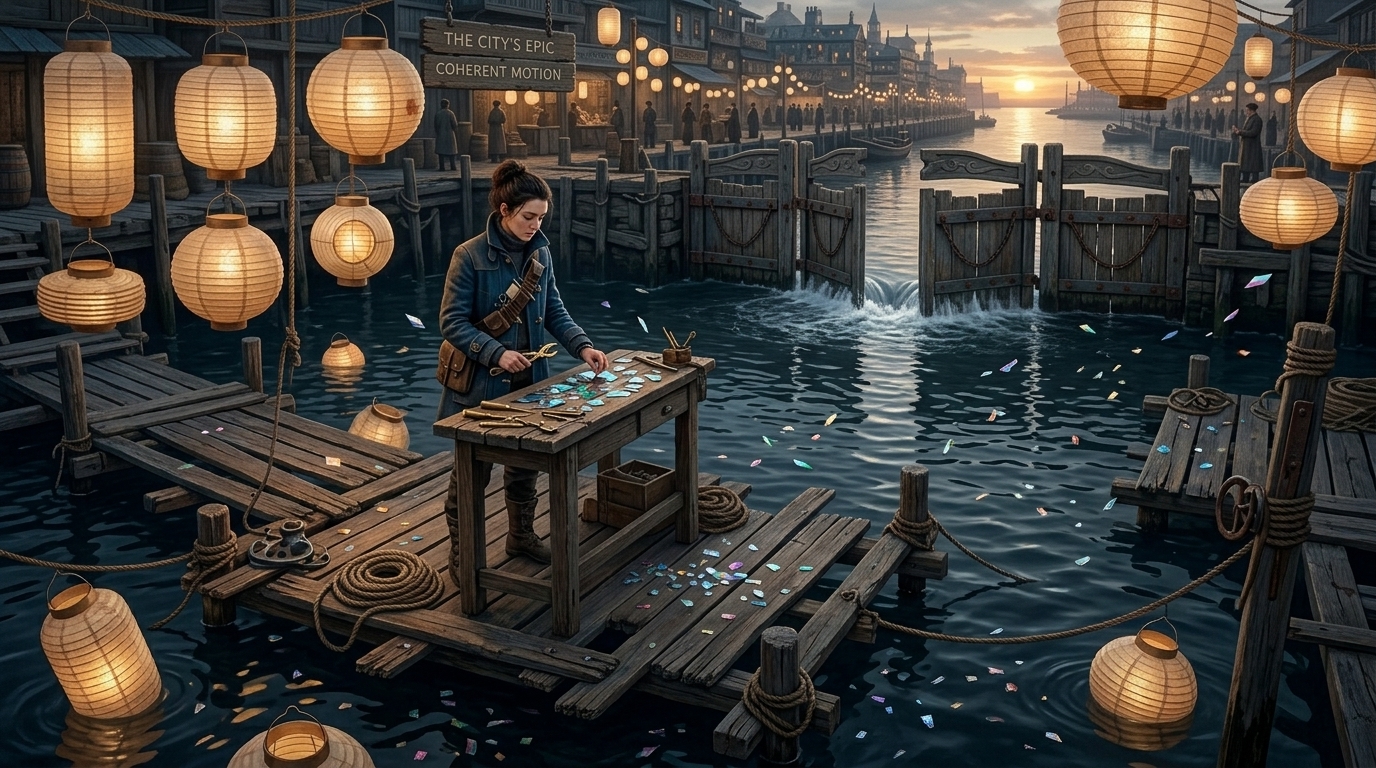
If this sounds familiar, it is because creator communities keep describing the same pain. Across filmmaking and AI discussions, the pattern repeats: too many disconnected tools, chaotic asset management, endless iterations, broken continuity, prompt overload, and timeline confusion.
A typical workflow might start in Midjourney for concepting, move to Runway or Kling for motion, get refined in Photoshop, tracked in Notion, assembled in Premiere, and organized through cloud folders and prompt spreadsheets just to remember which version of a scene was supposed to match which character. The workflow itself becomes the problem.
That is why discussions like this AI workflow thread on Reddit and this filmmakers’ discussion about AI workflows matter. They are not just product chatter. They are evidence that the center of gravity has shifted from generation to orchestration.
The tools keep multiplying. The editorial burden keeps growing.
Why This Is a Filmmaking Problem, Not Just an AI Problem
Professional filmmakers experimenting with AI keep returning to the same fundamentals: storyboard, blocking, editing, pacing, continuity. Those are not optional polish steps. They are filmmaking.
That is why the best critique of AI video is not simply that it looks fake. It is that it often does not understand cinematic language. As one Creative Bloq piece puts it, AI filmmaking can be a gimmick if you do not know the rules of cinema. That may sound blunt, but it points to something real: the medium still depends on classic film grammar.
A shot is not enough. A sequence matters. A sequence is not enough. The relationship between shots matters. Emotional escalation matters. Timing matters. Geography matters. The audience has to know where they are, what changes, and why that change matters.
This is why the future of AI filmmaking is increasingly timeline-based. The creator is not just prompting isolated generations anymore. They are assembling a structure: script planning, scene organization, storyboard generation, character continuity, shot management, and timeline editing all linked together.
In other words, the future AI filmmaker will orchestrate scenes, refine pacing, maintain continuity, manage visual relationships, iterate editorial structure, and direct emotional flow. They will not just type prompts, generate clips, and export results.
AI Is Becoming Infrastructure, Not the Film Itself
One filmmaker put it simply: “AI is basically the set.”
That is the right metaphor.
A set is important, but it is not the story. It is infrastructure. It gives the production something to work with, but it does not replace direction, performance, blocking, or editing. AI is moving into that same role: powerful infrastructure for concepting, generation, organization, and iteration, but not a substitute for the human judgment that turns raw material into cinema.
This is especially obvious in connected production environments, where script planning, scene organization, storyboard generation, character continuity, shot management, and timeline editing stay linked instead of collapsing into disconnected generations. Once productions move beyond short demos, continuity of context becomes essential. You cannot keep throwing isolated clips into a folder and call it filmmaking.
The emerging language around AI film pipelines reflects that reality. More of the conversation is about storyboard-first workflows, structured scene planning systems, editorial flow, production pipelines, and collaborative workflows. Research and practitioner discussion are increasingly focusing on continuity, cinematic structure, and orchestration—not just generation quality.
The Future Belongs to Structured Production Systems
This is why isolated generators are no longer enough.
If you can generate 50 close-ups, 20 camera angles, alternate character looks, multiple lighting versions, and endless pacing variations, then the hard question is no longer “Can the tool make this?” It is “Which version actually serves the story?” That is an editorial question.
And editorial questions need systems.
The future of AI filmmaking is shifting toward production systems instead of single-shot generators because the real task is not output volume. It is coherence. The creators who succeed will not be the ones who can write the fanciest prompts. They will be the ones who can structure scenes, preserve continuity, control pacing, and manage emotional progression across a timeline.
That is also why structured AI movie-making software matters. Not because software replaces craft, but because craft now needs infrastructure that can hold complexity. A connected workflow for filmmaking, production, storyboarding, and concepting is no longer a nice-to-have. It is one of the few ways to keep editorial intent from getting lost in an explosion of versions.
That is where many creators are landing in practice. They do not need more prompts. They need a timeline that can hold the film together.
The Real Creative Skill Is Going Back to Basics
This is the important correction to the AI hype cycle: AI did not eliminate filmmaking fundamentals. It exposed how essential they are.
The creators who thrive in AI filmmaking will understand story structure, visual continuity, editing rhythm, cinematic language, and emotional progression—not only how to generate impressive clips. The moment you try to make something longer than a highlight reel, you rediscover the same disciplines film schools have always taught: sequencing, pacing, continuity, blocking, and shot relationships.
That is not a setback. It is a reminder.
AI is making the filmmaking process more accessible, but it is also making editorial judgment more important. A prompt can produce material. Only editing can produce a film.
For teams building that kind of workflow, the shift points naturally toward tools and systems that connect generation to structure instead of isolating them. If you are exploring how that works in practice, the next step is less about mastering prompts and more about organizing the production around the timeline.
That is where AI stops being a novelty and starts becoming infrastructure.
A Shot Is Raw Material, Not a Movie
The early AI filmmaking promise was simple enough to fit on a slide: type one brilliant prompt, generate a movie, done. That vision still dominates a lot of AI marketing because it is clean, fast, and easy to sell. But it misses what people actually discover the moment they try to make something watchable: the hard part is not getting a shot; it is making a film.
That is the central turning point in AI filmmaking. The bottleneck is shifting from “Can I generate footage?” to “How do I turn all of this into a coherent film?” And once you cross that line, the conversation stops being about prompting and becomes an editing problem.
A beautiful AI-generated shot is not a movie. It is raw material. In traditional production, a stunning frame does not automatically create emotional storytelling. Films emerge from sequencing, pacing, juxtaposition, emotional escalation, rhythm, shot relationships, and continuity. Prompting can create options; editing creates narrative.
That distinction matters because most AI video tools are still built around the idea that generation is the main event. In reality, once creators move beyond fake trailers, mood reels, montage-style edits, and disconnected cinematic moments, the challenge changes completely. Now each shot has to connect to the next one. Tone has to hold. Geography has to remain legible. Emotional progression has to feel intentional. The film has to move.
And this is where AI generation has not reduced complexity so much as multiplied it.
Instead of one take, you may now have 50 close-ups, 20 camera angles, multiple lighting versions, alternate character looks, and endless pacing variations. Instead of a single output, you get dozens of variations, hundreds of possible shots, and infinite visual branches. That sounds like freedom until you realize that every new option becomes another editorial decision. The question is no longer whether you can make footage. It is which version actually serves the story.
That is why AI filmmaking is becoming an editing problem, not a prompting problem.
The explosion of variation changes the whole workflow. Traditional filmmaking has constraints built in: limited shoot days, budgets, weather, coverage, and takes. Those constraints are annoying, but they also force decisions. AI removes many of those constraints and replaces them with abundance. In theory, abundance should help. In practice, it creates workflow chaos.
Creators across filmmaking and AI communities keep running into the same pain points: too many disconnected tools, chaotic asset management, endless iterations, broken continuity, prompt overload, and timeline confusion. A typical workflow might jump from Midjourney to Runway to Kling to Photoshop to Notion to Premiere, with cloud folders and prompt spreadsheets trying to hold the whole thing together.
At a certain point, the workflow itself becomes the problem.
That frustration shows up clearly in Reddit discussions, where filmmakers and hobbyists keep asking how to maintain structure across AI productions and how to organize work that can splinter into dozens of branches before it ever reaches an edit. The conversation is less about “best prompt” and more about “how do I keep this from turning into a mess?” That is an editorial question.
This is also why the current tool ecosystem feels fragmented. Isolated generators can make clips, but they do not naturally solve shot relationships, scene flow, or version control. They give you material, not structure. And without structure, every new generation creates another decision point, another folder, another branch, another chance for continuity to collapse.
What Breaks First Is the Film’s Internal Logic
The failure modes are remarkably consistent.
- Pacing problems: scenes linger too long or cut too fast, so the energy never builds. - Continuity breaks: a character changes appearance, a prop disappears, a room shifts shape, or time jumps without support. - Tone drift: a scene starts grounded and ends melodramatic, or starts epic and becomes flat. - Collapsing emotional progression: the film cannot carry feeling from one beat to the next. - Unclear geography: viewers cannot tell where characters are in relation to each other, so the scene loses spatial logic.
These are not usually generation failures. They are editing failures.
The image quality may be strong, but the film still breaks when the edit cannot carry meaning from shot to shot. That is why the most useful AI filmmaking software will not just generate clips; it will help creators manage continuity, compare versions, organize scenes, and keep the timeline coherent.
The deeper irony is that AI may be pushing creators back toward the fundamentals traditional filmmaking always depended on. Because when generation becomes cheap, the creative advantage shifts to the person who can organize complexity. The filmmaker who thrives will not just be the one who writes the fanciest prompt. It will be the one who understands story structure, visual continuity, editing rhythm, cinematic language, and emotional progression.
That is the real corrective to AI hype.
The promise was never wrong because it was ambitious. It was wrong because it assumed generation was the finish line. In filmmaking, generation is only the beginning. The shot is raw material. The movie is what happens after the edit.
For creators building toward that reality, the next step is not more prompt tricks. It is better structure: storyboards, connected production workflows, and editorial systems that can hold the chaos. That is where AI stops being a toy and starts becoming infrastructure.
If you want to see what that looks like in practice, the most useful place to start is with tools built around the whole pipeline, not just the output clip — from storyboard planning and visual pre-production to connected production and editing inside a single filmmaking workflow.
Why the Edit Is Where AI Films Fail or Work
The early AI filmmaking promise was easy to market: type one brilliant prompt, generate a movie, done. But when creators actually try to make something coherent, the same truth keeps surfacing. The bottleneck is not generation. It is editing.
That is because a shot is not a movie. It is raw material. Films are built from sequencing, pacing, juxtaposition, emotional escalation, rhythm, shot relationships, and continuity. Editors give shape to tension, timing, and narrative clarity. Prompting creates options; editing creates meaning.
Once a project moves beyond fake trailers, mood reels, and montage-style edits, the failure points become obvious. Multiple scenes have to connect. Tone has to stay consistent. Geography has to make sense. The emotional arc has to carry forward. That is where AI films often start to fall apart: pacing problems, continuity breaks, tone drift, collapsing emotional progression, and unclear spatial logic.

Abundance is the new bottleneck
AI does not just make footage faster. It makes more footage.
A single scene can now produce dozens of variations: different camera angles, lighting setups, character looks, and emotional beats. That abundance feels liberating until you have to make decisions. The hard question becomes, which version serves the story?
That is why the real challenge in AI filmmaking is selection, ordering, and orchestration. The creator is not drowning in a lack of material. They are drowning in choices. And every choice is an editorial decision.
Traditional filmmaking had constraints that forced clarity: limited takes, weather, budget, coverage, and time. AI removes many of those constraints, but it does not remove the need for judgment. It just moves the burden downstream into the edit.
The workflow falls apart before the film does
This is why the workflow itself becomes a major source of failure. Creators often jump between Midjourney, Runway, Kling, Photoshop, Notion, Premiere, cloud storage, and prompt spreadsheets just to keep the production legible.
That fragmentation is not a side issue. It is part of the problem.
Across creator communities, the same complaints keep appearing: too many disconnected tools, chaotic asset management, endless iterations, broken continuity, prompt overload, and timeline confusion. The issue is not just that the tools are separate; it is that the film has no single place where structure lives.
That is why the conversation has shifted from “best generator” to “best workflow.” The moment you need version control, scene tracking, continuity notes, and timeline assembly, isolated generation stops being enough.
What the edit reveals
What breaks first is the internal logic of the film.
- Pacing problems make the energy stall. - Continuity breaks make the world feel unstable. - Tone drift makes the emotional register wobble. - Collapsed emotional progression prevents scenes from building on each other. - Unclear geography makes the audience lose their bearings.
These are not mostly model-quality issues. They are film-language issues.
That is why the strongest AI filmmaking teams keep returning to the fundamentals: storyboard, blocking, editing, pacing, and continuity. These are not legacy habits to be replaced. They are the craft that makes the technology usable.
AI is infrastructure, not authorship
One filmmaker’s line captures the shift well: “AI is basically the set.”
That is the right framing. A set enables the scene, but it does not decide the scene’s rhythm, meaning, or emotional weight. AI can generate the room, the character, the lighting variant, the alternate angle. It cannot decide what belongs in the timeline.
That is why the future of AI filmmaking is moving toward structured production systems rather than isolated generators. The work is increasingly about script-linked planning, storyboard generation, character continuity, shot management, and timeline editing inside one connected environment. As more teams move beyond demos, continuity of context becomes essential.
Tools like structured AI movie-making software matter for that reason: not because software replaces craft, but because craft now needs infrastructure that can hold complexity. Connected filmmaking, production, storyboarding, and concepting are less like feature add-ons and more like the minimum requirements for keeping a film coherent.
The deeper irony is that AI may be pushing creators back toward the basics film schools have always taught: structure, rhythm, continuity, and cinematic language. The people who succeed will not just be prompt writers. They will be editors, orchestrators, and visual storytellers.
That is the real correction to the hype.
The promise was never wrong because it was ambitious. It was wrong because it treated generation as the finish line. In filmmaking, generation is only the beginning. The shot is raw material. The movie happens in the edit.
If you want to build for that reality, the next step is not more prompt tricks. It is better structure: storyboard planning, connected production workflows, and editorial systems that can hold the chaos from first concept to final cut.