
Handoffs survive
Writers, board artists, and generators can work in parallel without rewriting the show.
Story bible
A story bible is the single document that says who these people are, what world they live in, how the show sounds, and which rules nobody is allowed to break. Writers use it so episode six does not contradict episode two. Studios use it so faces, costumes, and locations do not drift. In an AI-native pipeline the bible is not optional paperwork—it is the only thing that keeps a generator from inventing a new character every shot. If you cannot point to a bible, you do not have a series. You have a folder of clips.
Definition
Names vary: series bible, show bible, character bible. The job is the same. It is not a pitch deck. A pitch sells the idea. A bible lets a team manufacture the idea without asking the creator every Tuesday.
For animation, the bible includes visual lock: turnarounds, palette, costume rules, and what the AI or the artist is forbidden to “improve.” Without that, every new shot is a negotiation.
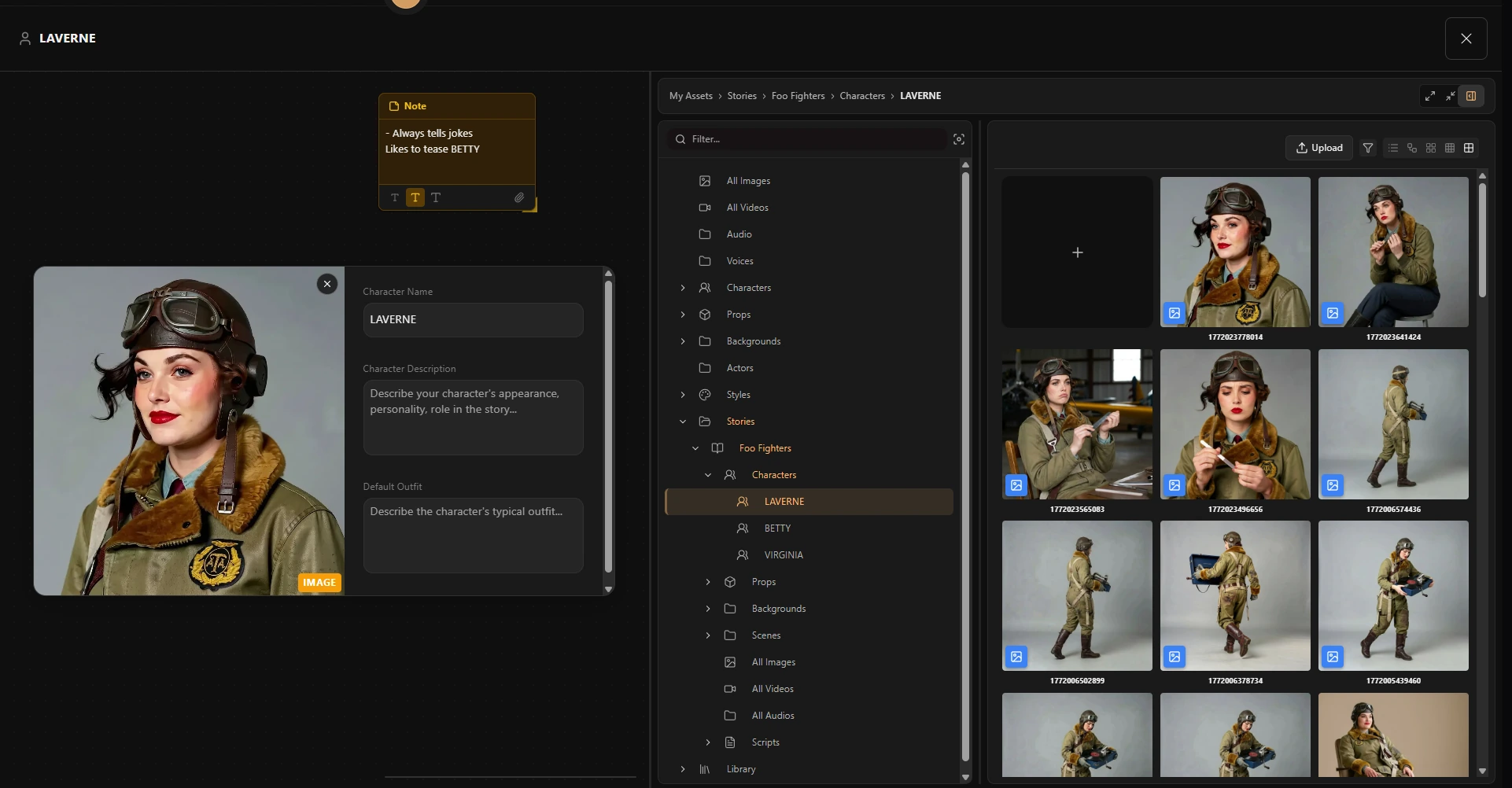
Faces that stay the same shot to shot are a character animation problem—the bible is how you specify that face.
Definition
A story bible is the living specification for a series—characters, world, tone, continuity rules, and the lines the production must not cross.
How it works
Who they are, what they want, how they speak, and who they cannot become by episode eight.
Places that recur, props that matter, and physics the show has agreed to.
Humor, violence, brand safety, and the visual grammar—so boards and generated shots have a north star.
The ten things that would make a buyer say this is no longer the same IP.
Why it matters
Writers, board artists, and generators can work in parallel without rewriting the show.
Partners can review what the IP is—not a vibe in a Slack thread.
Prompts without a bible invent. Prompts against a bible can be directed.
FAQ
Related
Share the IP and the episode count. We will tell you whether you need development, a pilot, or you are ready to produce.