
Animating the wrong story
It is cheaper to recut stills than to regenerate a finished scene that never belonged in the film.
Animatic
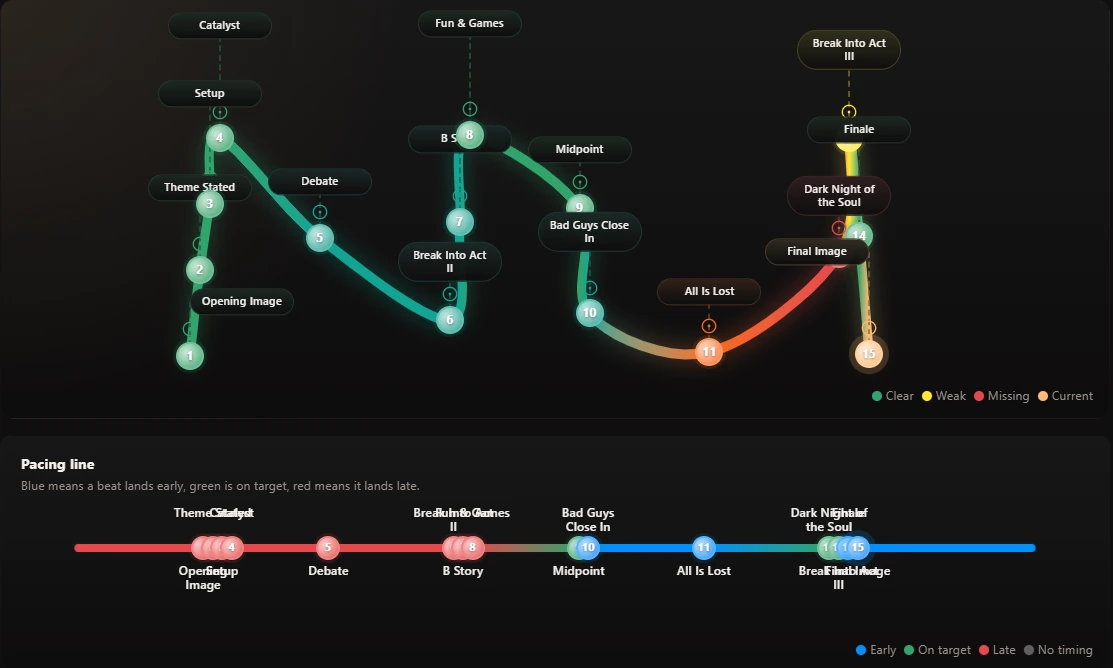
An animatic is a moving draft of a film made from storyboard frames (or simple layouts), edited to length, usually with scratch voice, temp music, and rough sound. It is not the animation—it is the argument for the animation: shot order, timing, jokes, reveals, and whether the story works before you pay for motion. Studios use animatics to get stakeholder sign-off, catch missing coverage, and prevent expensive reshoots of scenes that never belonged in the cut.
Definition
A storyboard is a sequence of stills. An animatic puts those stills on a timeline. The difference is time: you can feel a pause that is too long, a joke that lands late, or a product shot that never earns its seconds.
Related terms overlap. Previz and virtual production are often more spatial and camera-accurate, especially for live-action or hybrid films. An animatic is the editorial cousin—cheap, readable, and built for approval.
Planning has its own budget. See storyboard services cost for what boards and animatics typically add to a production.
Definition
An animatic is a timed assembly of boards or layouts that proves pacing and shot design before finished animation is produced.
How it works
Wording and scene intent must be stable enough that timing notes are not wasted on a draft that will be rewritten.
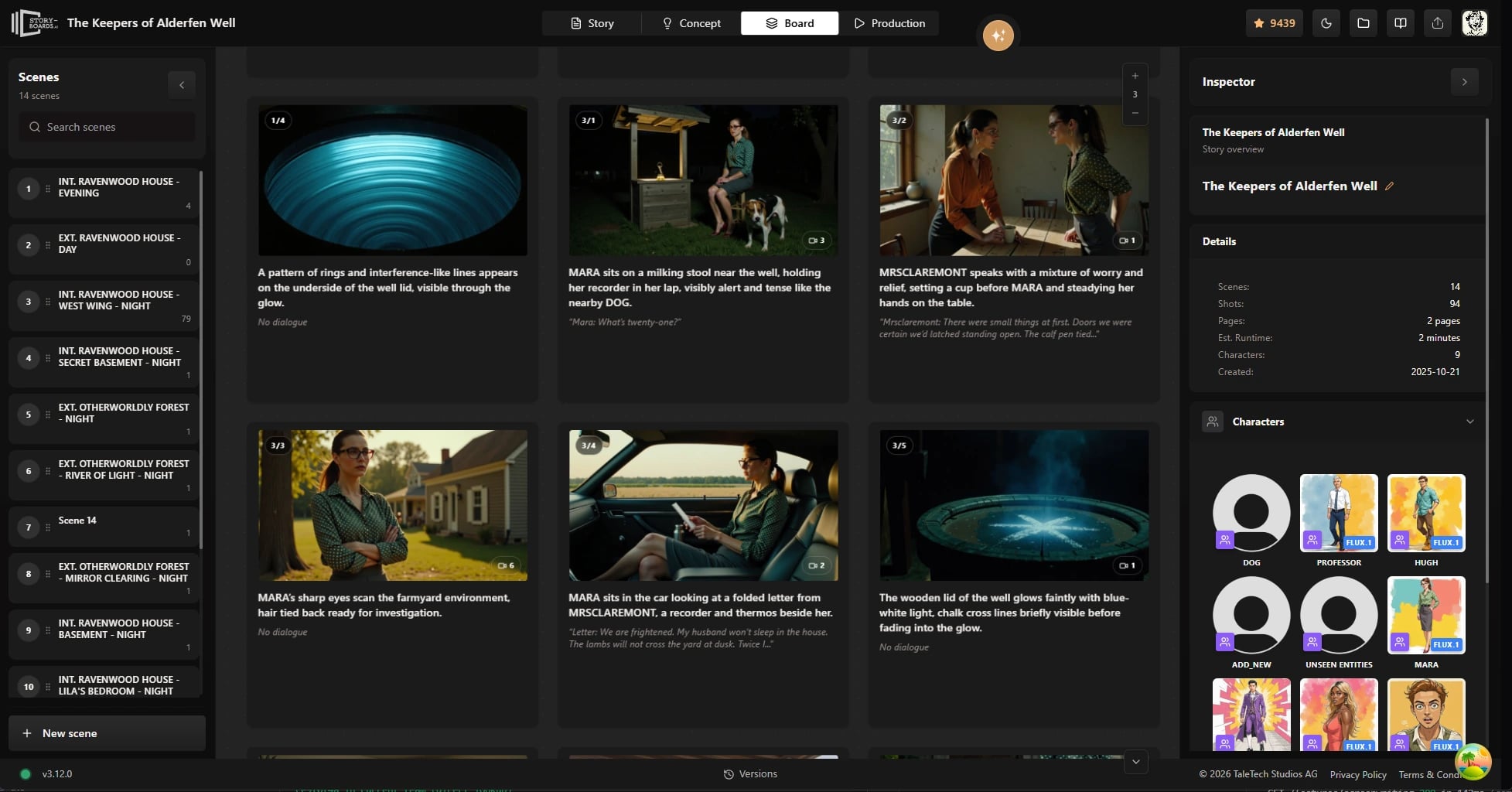
Key poses, camera sizes, and transitions are drawn or generated as stills that can be read at a glance.
Stills are cut to target runtime with scratch VO or temp track so stakeholders watch a film, not a PDF.
Story notes happen here. Animation starts only after the animatic is the agreed spine.
Why it matters
It is cheaper to recut stills than to regenerate a finished scene that never belonged in the film.
Legal, brand, and executives can approve pacing and claims before craft spend accelerates.
Scratch tracks reveal whether the script is speakable and whether music fights the picture.
Comparison
| Stage | What you can decide | What you still cannot see |
|---|---|---|
| Storyboard | Shot list, composition, continuity of beats | True runtime, rhythm, sound |
| Animatic | Pacing, edit, VO fit, missing coverage | Final performance, lighting, finish |
| Animation | Motion, acting, light, grade, mix | Cheap story changes—those now cost real money |
Use cases
Brand and agency
Claims, logos, and legal lines have to hit on time. An animatic is the last cheap place to move them.
Entertainment
Act structure and character intros fail in stills. Time is how comedy and dread actually work.
Product
If a UI beat needs three seconds, the animatic proves it before you animate chrome.
FAQ
Related
What planning stages add to a production budget.
ContinueWhen spatial previz goes beyond a 2D animatic.
ContinueProof-of-concept films that often start as animatics.
ContinueCiaro Studio’s production path from brief to master.
ContinueShare the script and the runtime. We will tell you whether boards, an animatic, or both belong in the first milestone.